What Is Plantain? A Guide to This Popular Tropical Fruit

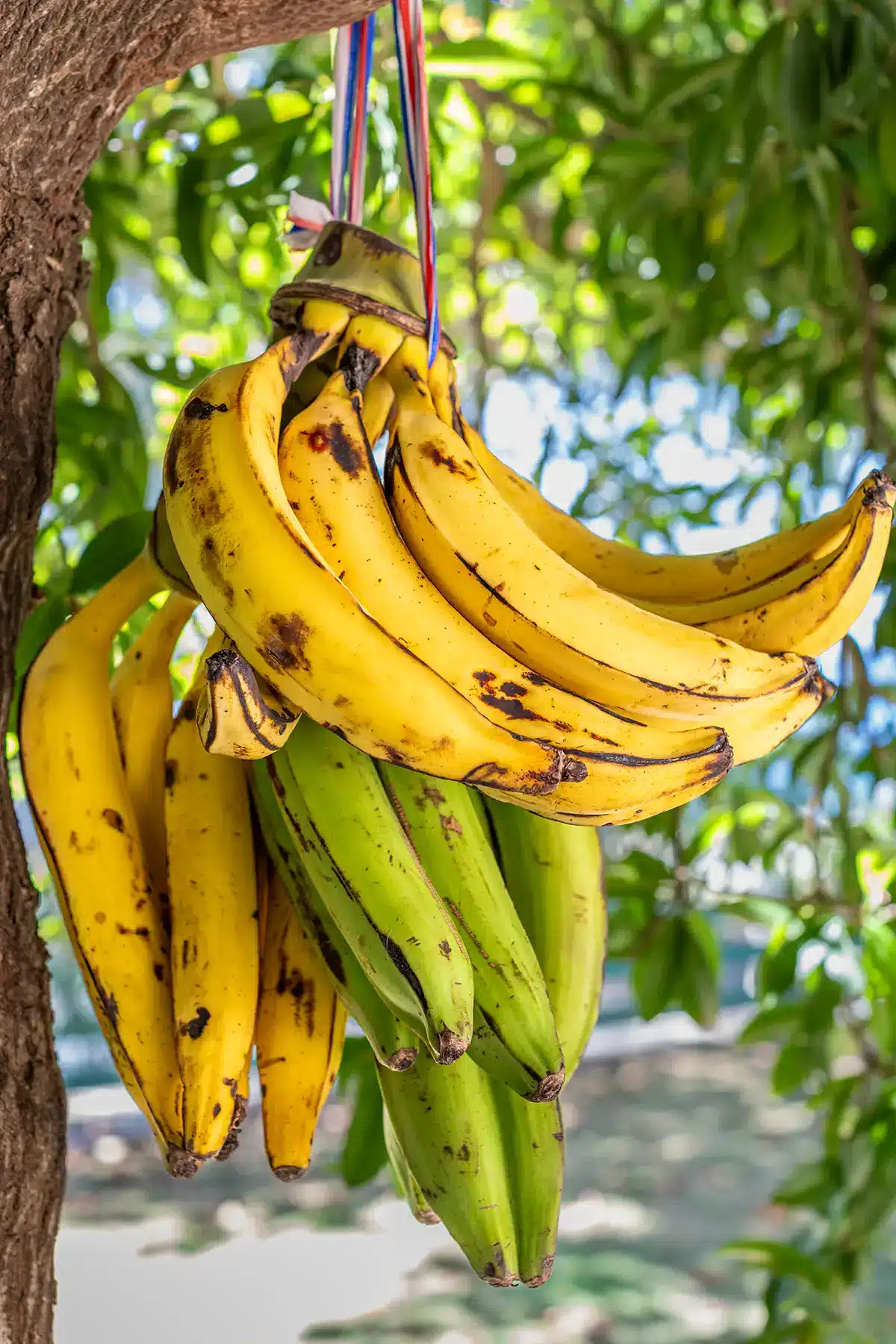
Plantain is a popular side dish in Jamaica, commonly served with breakfast, lunch, or dinner. The choice between using a green or yellow plantain offers a variety of flavours and textures. Plantain is a versatile ingredient used in a variety of Jamaican recipes. Plantains are easy to prepare and can be found in most Caribbean or Indian supermarkets.
What is plantain?
Plantain is a tropical fruit that belongs to the banana family. The fruit grows on a large herbaceous plant, which is considered the world’s largest perennial herb.
Even though plantain is a fruit, it is treated as a vegetable in African, Caribbean and Latin American cuisines, where it is used as both an everyday staple and a versatile ingredient. Unlike ripe yellow bananas, which are usually eaten raw, plantains are typically cooked before eating. In Jamaica, both green and ripe plantains are enjoyed, most commonly fried and served as part of a traditional breakfast alongside other hearty favourites.
When unripe, green plantains are firm and notably starchy, so they are often fried or used to make other savoury dishes. As they ripen, the fruit softens and becomes very sweet, and it is used for a variety of dishes, including making drinks.
Plantain Vs Banana
Plantains and Bananas are not the same fruit, even though they look similar in appearance and come from the same plant family. They differ in taste, texture, and how they’re used in cooking.
Plantains are usually larger, starchier, and less sweet than bananas, especially when green. As plantains ripen, they become sweeter but retain a denser texture than ripe bananas. Traditionally, in Caribbean cooking, ripe plantains are fried, boiled, roasted (grilled), or used to make desserts and punches. The green starchy plantain is usually only fried.
Bananas, on the other hand, are typically softer. The ripe banana is sweeter and, unlike ripe plantain, is eaten raw. Green bananas are a staple in Jamaican cuisine as a group provision. Plantain and banana differ not only in taste, size, or how they are used in cooking, but also in their nutritional profiles.
What Does Plantain Taste Like?
The taste of plantains changes dramatically as it ripens, making it one of the most versatile tropical fruits in the kitchen. Green plantains are firm, starchy, and have a mild flavour, often compared to a potato or cassava rather than a banana. Because they contain very little sugar, green plantains are commonly used in savoury dishes such as chips and tostones. In Jamaican cooking, they are also used to make porridge and plantain punch, where their natural starches help create the thick, creamy texture that defines these dishes.
As the fruit ripens and the skin turns yellow with black spots, plantains become softer and sweeter while still retaining some of their starchy character. But when the skin of the fruit turns black, the starch naturally converts to sugar, making plantains much sweeter and softer. In Jamaican cuisine, yellow plantains are usually fried or boiled, and black plantains are used to make fritters, a dessert-like dish eaten at breakfast.
Plantain’s origin
Plantain is a fruit cultivated and domesticated by people over thousands of years. This fruit, with its origin in Southeast Asia, evolved from native wild banana species in the region. Plantains are now widely grown in many tropical regions, including the Caribbean, Africa, and throughout Central and South America.
It is said that plantain was introduced to Jamaica by Jean Francois Pouyat, a French botanist and chemist who settled in the country around 1820. Now since then, plantain has been one of the main crops to farm throughout Jamaica.
Plantain is the fruit of a giant herb plant, despite its resemblance to a tree. The same is true for the banana plant. Plantain and banana plants look alike, but there are differences. Plantain plants have purple flower clusters, while banana plants have cone-shaped flowers that open up to reveal small flowers. The easiest way to differentiate between the banana and plantain plants is by looking at their fruit.
Green plantain vs yellow plantain
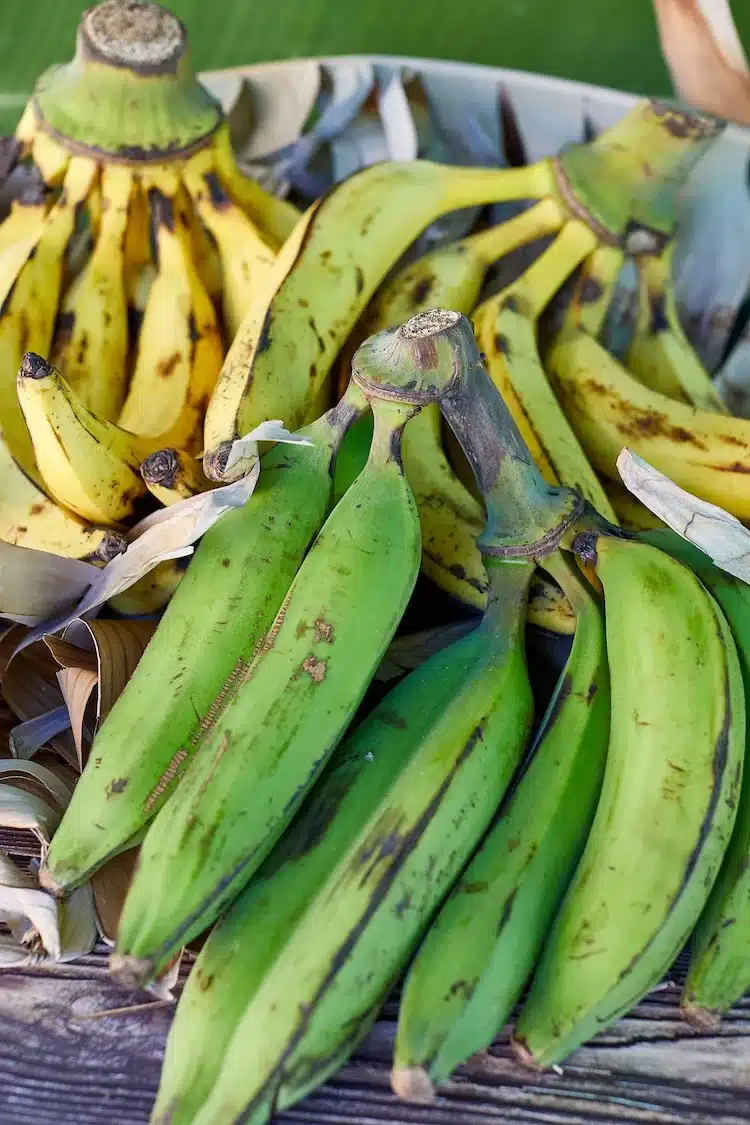
Unripe plantains are green and ripen to yellow, then brown, and then black. A yellow, or ripe plantain has a firm yet slightly soft texture, and it gives a little when you squeeze it. Green plantains has a hard, thicker skin that does not give way to pressure. Ripe plantains smells and tastes sweet and fruity, while green plantains smells grassy and green. Green plantains are starchier with a bland taste. Green plantains must be cooked before consumption as they cannot be eaten raw like yellow plantains.
Plantains are usually harvested green and left to ripen on the counter. Depending on the temperature and humidity, fully matured unripe plantains can take 2-7 days to ripen naturally. To ripen green plantains faster, put them in a paper bag with a ripe banana or apple. You can also wrap the plantains in newspaper to trap the ethylene gas they naturally produce as they ripen.
So if you’re new to buying plantains and you’re not sure which ones to choose, the decision between green and yellow ones depends entirely on your taste preferences and how you plan to use them. So go ahead and pick the ones that are best suited to your needs!
Green plantains not turning yellow
Not all green plantains turn yellow when they are ripe. For instance, the horn plantain is a variety that stays green even when fully ripe. However, there are several reasons why a plantain that changes colour may not turn yellow. One is that they were picked too early. Another reason could be that they were not exposed to enough ethylene gas, a natural hormone that triggers ripening. Additionally, if stored in a cold or humid place, the ripening process will be slow.
How are plantains eaten?
The stage of ripeness determines how plantains are cooked or prepared. In Jamaica, plantains are usually boiled, fried, roasted, and baked in its natural form. Typically, the peel is removed from plantains before cooking, as only the flesh and seeds are edible. However, when boiling ripe plantain, it’s possible for the peel to be removed after the plantain is cooked. This is how to boil plantains Jamaican-style. Ripe boiled plantain is a traditional Jamaican food that takes 15-30 minutes to cook, depending on size and ripeness.
Fried ripe plantains are the preferred way to eat plantains among Jamaicans, as it is soft and sweet. When green plantain is fried, they are crispy, often salted and pressed out. Jamaicans commonly refer to this dish as “pressed green plantain”.
Plantain nutrition and benefits
Plantains are not just tasty but they has many nutritional benefits such as a significant amount of fibre, vitamins, and minerals. Due to their high fibre content, antioxidants, potassium, and vitamin B6, they offer numerous health benefits. Regular consumption of plantains can aid digestion, help manage weight, and promote heart health. Additionally, they can help regulate bowel movements, lower cholesterol levels, boost the immune system, maintain fluid balance, and support metabolic processes.
Jamaican plantain dishes
Some popular Jamaica plantain recipes include plantain chips, fritters, porridge, and punch. Don’t miss out on exploring all the amazing ways to incorporate plantains into your meals.
Also come find me on Pinterest, Facebook and Instagram. Don’t forget to subscribe to my newsletter for recipe updates and occasional kitchen tips and tricks!