
How To Cook Jamaican Hard Food?

You know you are officially an authentic Jamaican when you have tried hard food – that was a joke. But Jamaicans usually consume hard food on the island, and it has not yet gained traction on the world stage. Hard food is more than just cooked green bananas and dumplings. Here you will learn what Jamaican hard food is, how to cook it, and how to eat it.

Yes – is it time to expand your Jamaican food palette and try hard food! The rice and peas dish is very popular, but there is more to Jamaican culinary culture. And hard food can be much healthier than rice.
Jamaican hard food meaning
Hard food is ground provisions, which include root vegetables such as potatoes, yams, cassava, dasheen (taro), coco (eddoes), and other fruits and vegetables that do not grow underground, such as green banana, plantain, chocho (chayote), pumpkin and breadfruit. But keep in mind that plantain and breadfruit are only considered hard foods, depending on how they are cooked. Fried breadfruit and plantain are not regarded as hard foods.
In Jamaica, boiled dumplings are also a part of hard food. Boiled dumplings are made with plain flour, optionally with salt, mixed with water to form a firm dough, which is then boiled. Jamaicans love boiled dumplings, and there are different varieties: cornmeal dumplings, cassava-flour dumplings, and green-banana dumplings, to name a few.
In short, Jamaican hard food is a side dish that includes boiled ground provisions and boiled dumplings.

Hard food recipes
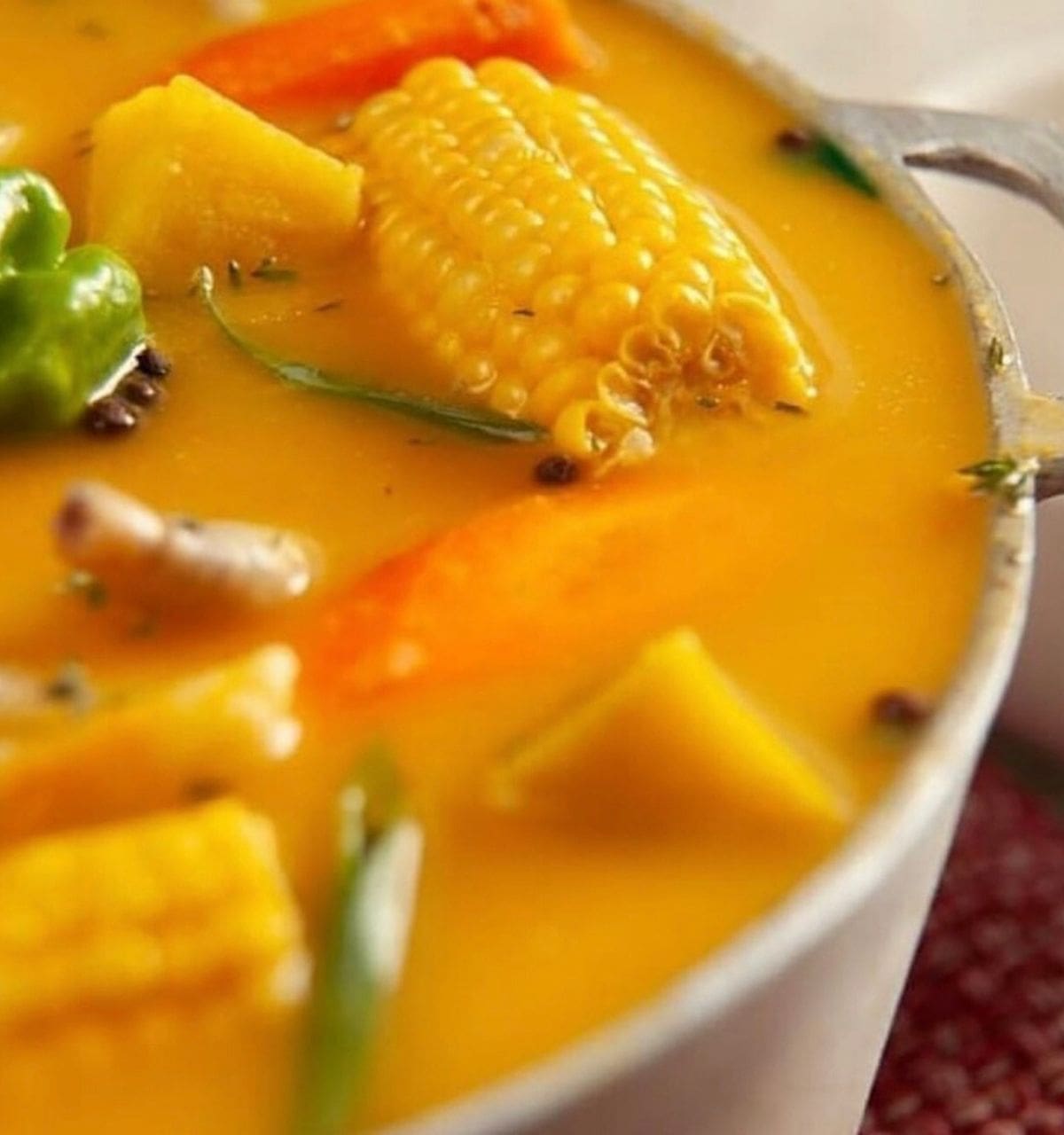
Hard food is boiled ground provisions, but Jamaicans have a variety of recipes for this one way of cooking. Jamaican soups are essentially ground provisions boiled in a broth. And the type of soup will determine which ground provision you will use. For example, you don’t put green bananas in Jamaican chicken soup, but it is a must in manish water.
For a simple side dish of hard food, you would boil the ground provisions in salt water, and cook whatever you feel like eating or have available.
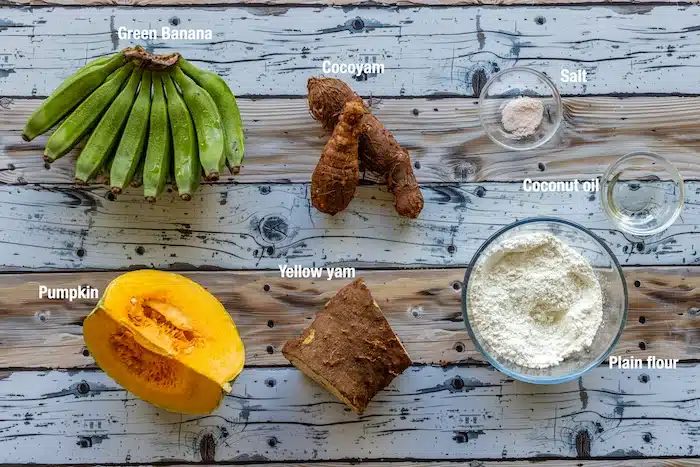
- Green banana: The less mature the green banana, the better. Young green bananas are softer and cook much quicker. More mature green bananas are harder and tend to turn the boiling water a reddish colour during cooking. There is nothing wrong with cooking and eating more mature green bananas, but if given the choice, choose young bananas.
- Yellow yam: Though I use yellow yams, there are many other yams you could try—soft yams, which cook more easily and are smoother than yellow yams. Yellow yams are more popular and readily available.
- Pumpkin: Best to get the type of pumpkin that grows in Jamaica.
- Coco: Coco, or eddoes in other regions.
- Plain flour: Plain flour to make the dumplings. You can’t cook hard food without including boiled dumplings. It’s unacceptable among Jamaicans.
- Salt: For flavour
- Cooking oil: Any cooking oil will do, but I use coconut oil.
Other ingredients you could add to the list above are ripe yellow plantain and sweet potato.
How to cook Jamaican hard food
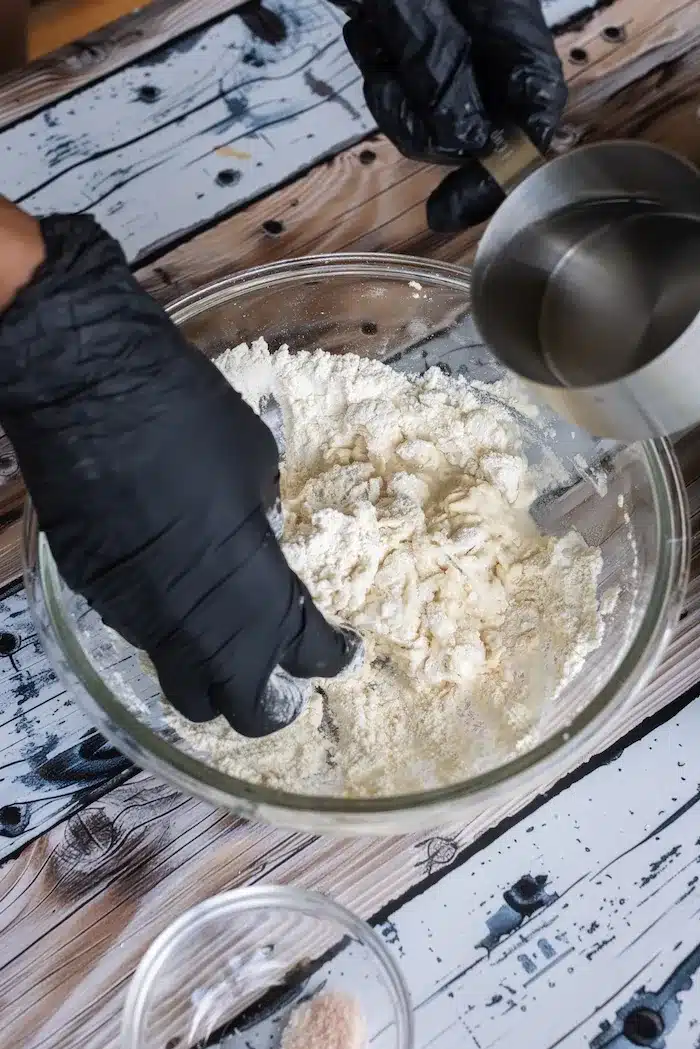
- Prepare the dumplings: Make the dumpling dough first by mixing the plain flour with water. It is optional to add salt to the mixture. If you have never boiled dumplings before, add a small amount of salt. Add the dumplings to the pot first because no matter how long you let them cook, they will not break apart like the banana or pumpkin. Want to be more Jamaican, add a small amount of cornmeal to the mixture.
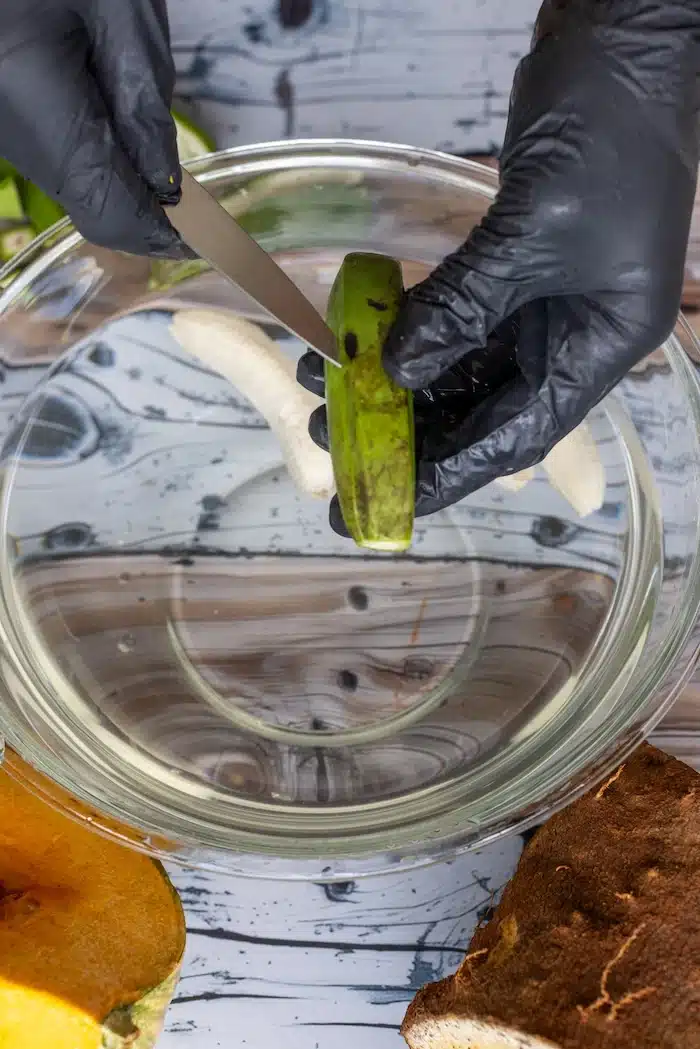
- Preparing the provisions: Peel the harder food first, like the yellow, sweet potatoes, dasheen, coco and green bananas if they are mature. These go into the pot after the dumplings, as they tend not to break apart easily when cooked. Cook foods like pumpkin, ripe plantain, and young green bananas to prevent them from breaking apart or becoming too soft during cooking.
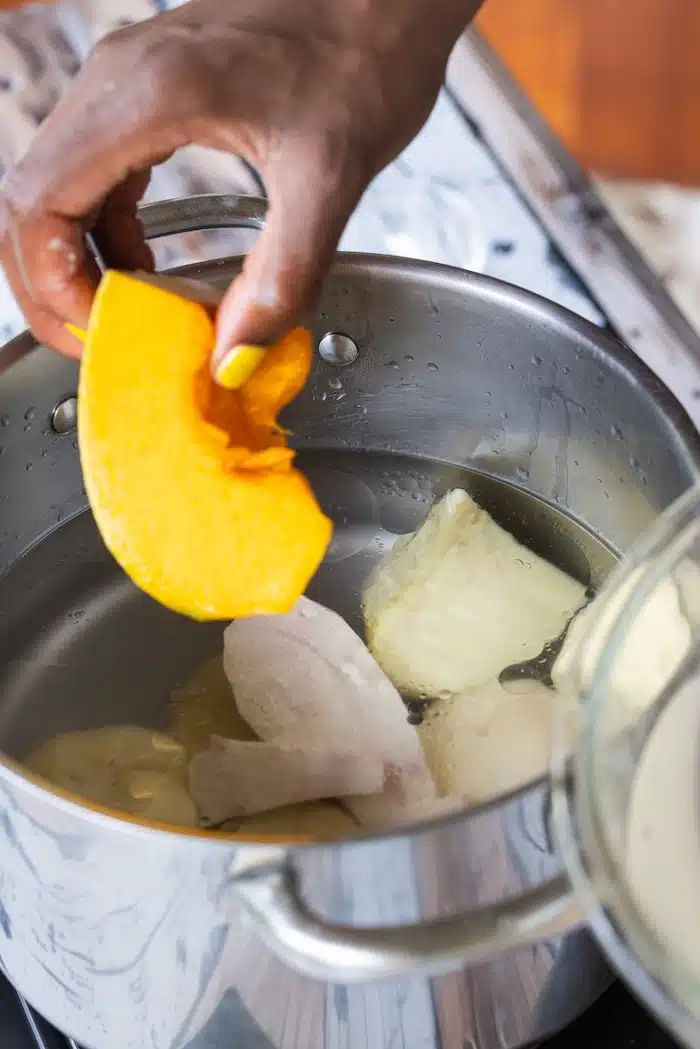
- Cook everything together: Add all the food to the pot and let it cook. Remember to add the easy-cooking food last to the pot so you don’t have to prepare everything at once. You could first boil the water, then make the dumplings. Add the dumplings to the boiling water. While they cook, prepare the yellow yams, dasheen, and coco, then add them to the pot to boil. Then prepare the pumpkin, ripe plantain, and so forth. This way, you will save time, and the easy-cooking foods don’t cook before the harder ones.
Cooking Tips
- Depending on the quality and maturity of the ground provisions, they will start to change colour when you peel them due to the sap or latex they contain. The discolouration is normal. To prevent it, place the ground provision in a pot of boiling water as soon as you finish peeling and washing. Hot water brings the colour back.
- Always add the dumplings to the pot first, because no matter how long the pot cooks, they never break apart. The other food gets enough time to cook. And if you are preparing as you go, you have time to peel and wash each food. Also, add the harder foods, such as the yellow yams, to the pot after the dumplings – they won’t break apart easily.
- Soft and easily cooked ground provisions, such as potatoes and pumpkin, go into the pot last.
Is Jamaican hard food good for you
Well, many Jamaicans from rural areas, who often live to 100 and beyond and whose diets consist of hard foods grown in their backyards, could suggest that hard foods are healthy. There is a concept in Jamaica that whenever someone does well in sport, such as Usain Bolt, it is because of all the yams and bananas they eat. The idea is that the hard food they eat gives them the strength, vitality, and health to perform at peak level.
But for a more scientific answer, minus the dumplings, hard foods are naturally grown food, cooked by boiling with minimal salt. Hard food is nutrient-packed. The complex carbohydrates in hard foods help release energy slowly, keeping you full longer than refined carbs. It also contains crucial nutrients such as fibre, which is essential for digestive health. Unlike processed foods, hard foods contain little sodium.

What to serve with hard food
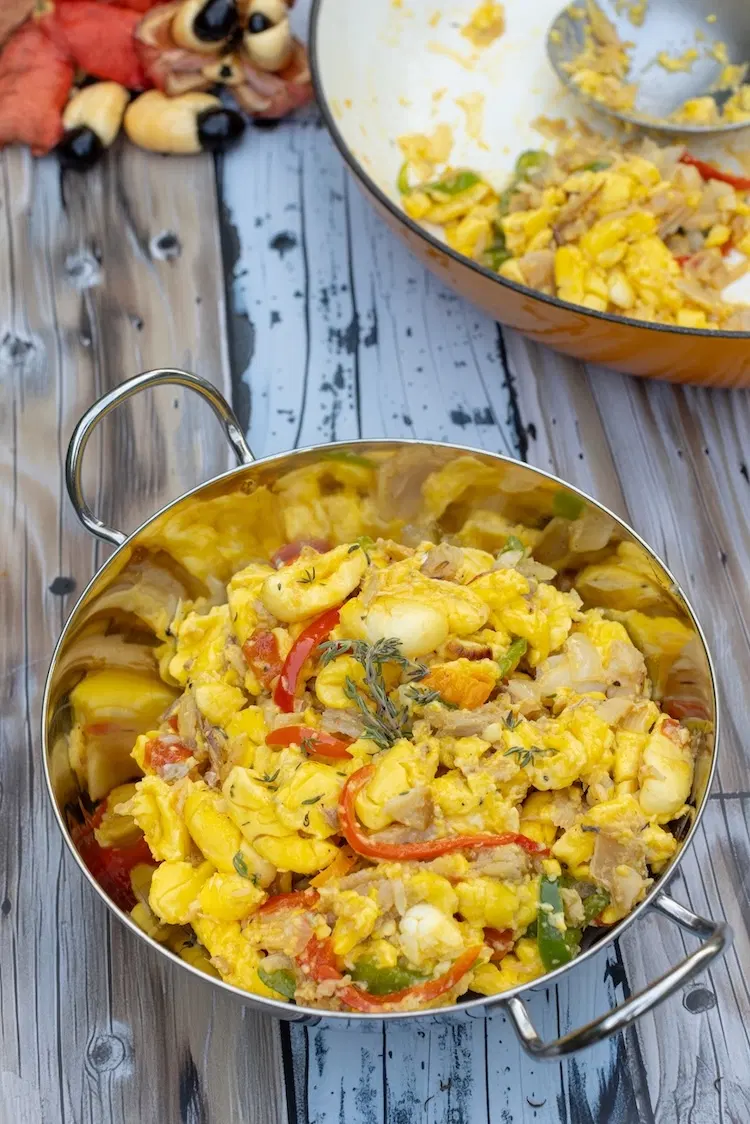
Depending on the main dish, Jamaican hard food is eaten either for breakfast or dinner. Usually on a Sunday morning, hard food, served with ackee and saltfish or steamed callaloo, is eaten for breakfast. Hard food, paired with curry chicken, brown stew chicken, or oxtail stew, is served for lunch or dinner.
Rundowns (Rundung), no matter what time of day Jamaicans eat them, are served only with hard food.

Jamaican hard food recipe
Ingredients
Method
- Add the flour and salt to a mixing bowl, then gradually pour in the water. Knead to form a firm dough.
- Separate the dough into 4 pieces and make 4 round dumplings.
- In a pot over medium heat, pour in about 4 cups of boiling water, then add the salt and cooking oil. Add the dumplings.
- Peel and wash the yellow yam and coco, cut them into two halves, and add them to the pot.
- Peel and wash the green banana and pumpkin, and add them to the pot. Cook for 15-20 minutes
Nutrition
Notes
- You could also add sweet potatoes and ripe plantain to the recipe.
- Salt is optional for the dumplings but if you have never eaten dumplings before add the salt.
- You could add a little bit of cornmeal to the dumplings
Tried this recipe?
Let us know how it was!THANK YOU for all of your support, for visiting my blog, commenting, and sharing my recipes with your friends and family. I am SO thankful for you!
If you try this hard food recipe, then don’t forget to rate it and leave a comment below. I would LOVE to hear about your experience and your comments just make my day
Let’s stay connected! Find me on:
- Also, subscribe to my newsletter for recipe updates!

Hello, I used your curry chicken recipe. It turned out good except I added too many pimento seeds which overpowered the curry. How do I fix it?
Thanks, Ms. Bflo
I am Afro American Woman and I never heard of this recipe before bananas yam and plantain until yesterday I talked to an African friend of mine that told me about it so I looked it up for once I tried and if I like it I would definitely leave you a comment on how it was and if I liked it and thanks for the recipe
thank you for sharing the recipe.
I just wanted to tell y how happy I am to have your recipes to turn to. I am an American, born in Tennessee but, love all things Jamaican. I have even used information from your recipes in a school project before graduating with an AAS in Culinary Arts. I visit Jamaica regularly and know your recipes are authentic Thank You! I love your recipes!
Can you freeze cooked hard food?